Total Pageviews

Showing posts with label Cyprus. Show all posts

Wednesday, April 10, 2013

Savers and Takers: The New Fault Lines and Social Unrest

An upcoming struggle is emerging in civil society.  It will be between those who have money but lack the political and financial power to defend it, and those who have the political clout to take it.

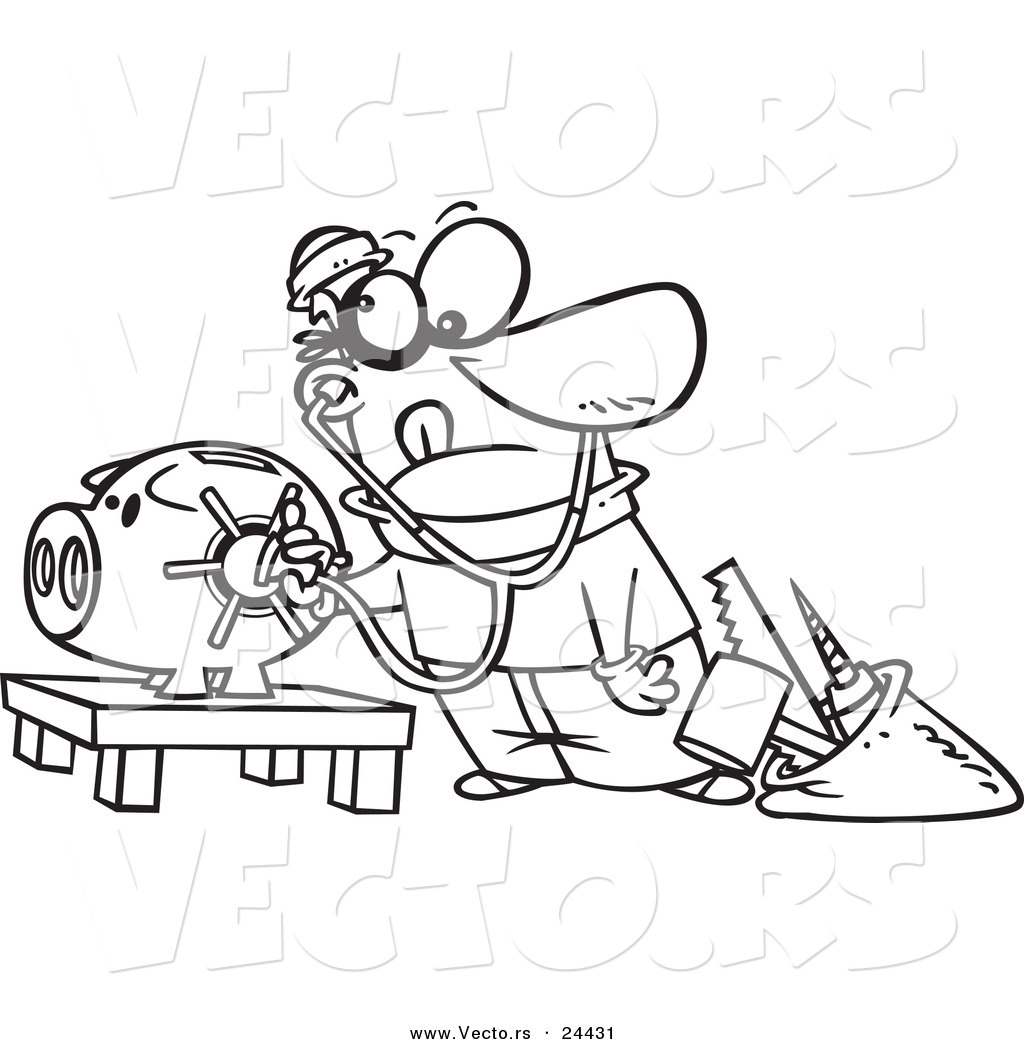
The Savers and the Takers.  


www.tntmagazine.com
www.telegraph.co.uk


This will happen because the capitalist system has been turned into a financialist system. The economy is no longer served by the banks and financial institutions.  We are now at a point where the banks force the economy to serve them.  Those who benefit are the financial class, their servants in the political class and the large international organizations such as the EU, the IMF and the World Bank.  Those who suffer are the rest of us who are trapped in the system and cannot find the means to escape it – but they do have small amounts of saved money or equity. 

Who are the savers? In short, it is those people who look to their own future and have taken decisions to set aside “value” from today and hold it for use tomorrow.  This includes those with savings deposits, private pension funds (401K, RRSP, ISA etc) and those who have equity in their homes. It also includes those who hold small physical amounts of precious commodities such as silver, gold and palladium.

The takers are those governments with unreasonably high debt levels and unfunded future liabilities. In cooperation with them are the major international banks that have over leveraged themselves as well as supra-international institutions such as the EU.

This meme – savers and takers – will shape much of the political and economic discourse over the next few years.  The existing examples of where this has occurred have been Greece, Spain, Ireland and Portugal.  How this all plays out is not clear, but there are lessons to be learned about the limits of the individual and social unrest.  

It may be that the takers themselves are those who will be responsible for a reset of the system which will produce chaos and then a new system (Capitalism 2.0 or something different?)  

The small time savers have their money stored in banks. As they are now beginning to realize, this may not be a safe plan. Having seen what happened in Cyprus and Spain and what is being planned in the UK, USA, Canada and Australia, they are getting worried.  As such, depositors are starting to remove their money from banks or are trying to figure out where else to store their wealth. 
 
This willingness to do whatever it takes on the part of the takers has a basic flaw.  The major banks are frequently leveraged out at 25: 1. This means they only have to lose some 4% of its deposits before they have liquidity problems. For more cautious banks that are leveraged out 15:1, this means they would only have to lose some 6% of their deposits before entering into crisis mode.  For those high risk institutions which can be leveraged out at 60:1, a two percent loss would start a bank run.
 
It can be seen that the savers - trying to guard what little they have - may start the run by taking out their savings. If only 4% or more of them do this, we are in trouble.

There is a lesson in all of this. 

It is tough to run a capitalist system with no real capital.  Real capital cannot be created by central banks simply “printing” money.  Real loans and real money have to be backed by real wealth or collateral.  It is clear that the ability to produce real collateral for loans is disintegrating as the standards are falling.
 
A Cyprus Style Bank Robbery
How will the takers take the money from the savers?
 
Multiple approaches exist. Among the most common or obvious are:

1. ZIRP –long term “zero interest rate policies” punish the savers and rewards the debtors.

2. Inflation is the silent thief and it is used by debtors to reduce the cost of repayment.

3. The Cyprus model – simply take the money directly.

4. The Spanish model – place an indirect tax on deposits using the banks as intermediaries.

5. The Australian Model – tax the private pension funds of those with more than $100,000.

6. The Canadian Model – force depositors into a bail-in.

7. The UK and USA model – use guaranteed deposit insurance money to bail out banks.

8. The bank model – use fees and huge spreads on interest rates (as much as 27%) along with fees on fear and the misspelling of products.


The Outlook

There is only one rule in economics that actually works:  That which cannot go on forever – won’t.

As such, the short term emergency policies of money printing and low interest rates will stop because they must.  When they do stop, the sins of more than 30 years of overspending and debt will have to be paid.

It is unlikely that either more austerity (belt tightening) or more stimuli can fix the current economic difficulties.  We are so far in debt in both sovereign and personal terms neither of these two models can assist. The austerity model (UK) is not doing so well and neither is the stimulus model (France).  The outcome is likely a major reset of the financial system which will cause much more trauma than the 2008 upset.  Savers beware and stand by for future shock.

Conclusion

Unless the banks and governments change the way they deal with the rest of civil society, we will be facing significant fault lines in our societies. The savers and the takers will find themselves increasingly at risk of social confrontation and social unrest.  The choice would appear to be between a long period of painful adjustment or a short sharp period of chaotic uncontrolled change.  Both will hurt.
 
 
----------------------


Supporting material can be seen at:

The Canadian Model for takers:  http://tinyurl.com/cvcf9v9 

The UK and USA model for takers: http://tiny.cc/z4jcuw

The Spanish model: http://tinyurl.com/cedrumy 

Why derivatives are dangerous: http://tinyurl.com/blhtc3q

Austerity model not working: http://tinyurl.com/c4chw5l

The inversion of banks and the economy: http://tinyurl.com/cdrnm7f 
 
ZIRP and Zombies: http://tinyurl.com/9wng9vf
 
A potential model for urban unrest and outcomes: http://tinyurl.com/cpwqle5

 
On a lighter note and just for fun, we are going to have an all Goldman Sachs MMA cage match between Mark “Brutal Reckoning” Carney and Mario “Whatever it Takes” Draghi.  Carney will be arriving at the Bank of England in July and this may lead to some interesting confrontations as ideas emerge on how to deal with fragile and fragmented economies.  http://tinyurl.com/c4dlrdt


Tuesday, March 26, 2013

Savers and Takers: Where Your Savings Money Will Go Expained in Plain Language by Two Ex-Central Bankers

***Feel free to ask questions or leave comments below.  We will reply.***

Being a saver will be punished by the takers. 

The Savers:  Those with a savings account, a personal retirement fund, a pension fund holder, equity in their homes or other cash assets.

The Takers: Governments with unseasonably high debt levels, supra-international institutions such as the EU, bankers, and financial institutions.

Clip art by Ron Leishman - http://vecto.rs/
 
Reduced to its most basic, the financial crisis that started in 2008 and what we now see in Cyprus occurred because of debt.  Governments in general have been on a spending spree since the mid-1980s. They are running out of tax money and have used up almost all the accounting tricks which allow them to kick the debt can down the road.  At the same time, the banks allowed themselves to  become “overleveraged.”  This is a polite way of saying they took a series of incredibly high risks with saver’s money and now those risks are blowing up.  They also have huge exposure or potential loses through derivatives as well.

Stripped of all the economic, financial and governmental jargon, here is the issue and why you should be afraid if you are a saver.

1. Governments are holding massive debt and unfunded liabilities  and they need more money.

2. Banks are often over leveraged and they need/want more money to prop up their risks.

3. Savers have cash and other assets.

4. Governments and banks will change the rules so they can take this money.

5. Savers will lose their money and debtors will gain from this. 

How are they taking your money?  Sometimes it is quite clear how they take your money, other times it is difficult to appreciate what they are doing to you.  However, here are the main ways it is happening:

1. Tax or levy:  The government can simply impose a direct tax or levy on your individual savings account. This is what just happened in Cyprus.

2.  Indirect tax or levy:  The government can take an indirect tax by taking money from the banks based on their total holdings of savers money. Then the banks have to make this back from the savers. This is what Spain is doing.  See http://tinyurl.com/cedrumy

3.  Taking depositor’s insurance money:  The government can plan to take deposit insurance money in a time of crisis. Instead of this money going to the depositors as it was planned, it will instead go to bailing out the bank itself. See http://tiny.cc/z4jcuw for what the UK and USA have been thinking in this area.
 
4.  Long term low interest rates. By keeping interest rates artificially low, the central banks are helping debtors incur more debt through lower costs.  However, this means those with savings accounts are getting paid virtually nothing for their savings. Those with investments for retirement are getting little as well, meaning their retirement years will be poorer than they thought.

5.  Lines of credit based on home equity.  If you have equity (value) in your home, banks are often pushing you to take on more debt by getting a line of credit against your house. So they arrange a home equity line of credit and drive you into debt. You lose some of your equity and you pay them interest for the privilege of doing that!

6. Inflation. Governments and economists claim that inflation rates are around two percent per year. In your own world it may seem that prices are increasing faster than two percent per year and you are right.  Government figures often do not include expense such as fuel and housing! By allowing real world inflation to run around five percent and then by paying you nothing on your savings, your own purchasing power and real value is decreasing while the cost of the debt for government and banks goes down. Inflation is a silent but effect thief!

The confiscation of money in private bank accounts was generally thought of as being an illegal and unacceptable practice. Now, as governments become desperate, is becoming a matter of national policy, overturning years of protection for savers.

Do the government and the bankers actually have the power to do this? For more on this see:  http://tinyurl.com/cdrnm7f   or http://tinyurl.com/9wng9vf

In the 2012 American election, both candidates and pundits tried to frame the election as being between the “makers” who work and the “takers” who live off government benefits.  
 
The current financial crisis may turn this into a struggle between the “savers” and the “takers.”

This is economics for the rest of us.  Savers beware!

Sunday, March 24, 2013

Spain Plans Small Raid on Saver's Deposits

***Please feel free to leave comments or ask questions at the bottom of the article. We will reply or will write a special article to answer your questions.***


With the negative publicity and real risks being generated by the raid on savings in Cyprus, you would almost think that policy leaders would see the danger in even talking about more raids on savers.


Minister Cristobal Montoro (right)
seen in this photo with an American industrialist
 - Photo from PBS.org
Not in Spain.  Believe it or not, the Spanish government is planning a depositors levy that will take some 0.1% to 0.2% from the banks based on their total level of deposits.  The difference appears to be that it will be the banks that have to pay the levy, rather than the money being taken from individual accounts.  The new measures will take effect in a matter of weeks. 

According to Treasury Minister Cristóbal Montoro, this levy will raise some 1.5 to 3 billion Euros.  This will help “impose order in the Spanish banking system” says the Minister without explaining how this will help.
We will only take this much - at least the first time! 
Photo by CBC.ca
Like any good politician, Mr Montoro says this is not his idea, but rather he is doing this to remain compliant with the wishes of the European Commission.  Again, no explanation of how this will keep the EC happy.

QUESTION:  Where will the banks get the 3 billion Euros to pay this new tax which will be based on deposits? 

ANSWER:  Depositors?  Stand by for more fees and lower service levels in Spanish banks as the banks find a way to pay this new tax. 

One thing is clear.  If you are a saver and you have money, the highly indebted governments and banks will find a way of getting it.

This is economics for the rest of us.  Savers beware everywhere!


(For more on what the Brits and the Americans are planning for their depositors, see http://tiny.cc/z4jcuw ) 

(For more on what is happening to Cyprus savers, see http://tinyurl.com/b2hqds6)

Friday, March 22, 2013

Spain and Cyprus - Savers Get Robbed Either Way

Warning: The bankers and the government will get your savings one way or another.

Note the protest sign at top:  Banks in Spain cheat on you!
BBC News - Getty Images

 
If you think Cyprus is a mess and the people there might get their savings accounts raided, wait until you see what the bankers and the government have just done in Spain.

Following the housing market crash in Spain, a number of regional banks were rapidly moving towards bankruptcy.  As a means of fixing this problem, the Spanish government and its central bank orchestrated a 2010 scheme whereby seven of the banks would be rolled into one and recapitalized.

As a means of raising cash for this new creation to be known as “Bankia” Spanish citizens were told by their local bankers that they could buy shares. Based on years of trust and government approval, some 350,000 Spanish citizens sank their hard earned cash into the new shares.

The Bankia shares were valued at 3.75 Euros and the citizens were told the bank would have a rough start followed by a return to profitability in a relatively short time.  Indeed, the bank announced that for 2011 it would make a small profit of 309 million Euros.

Small problem however... 

Instead of making some 300 million Euros as announced, the bank later re-estimated its accounts and stated that it would lose approximately 3 BILLION Euros instead. 

On top of all of that, the bailed out bank would need to be bailed out again. 

The upshot for the Spanish citizens was that their 3.75 Euro shares were today valuated at – get this -.01 Euros or one cent apiece.  To add insult to injury, the Spanish government has also announced there will be a sort of inverse stock split of 100 to 1. 

In other words, for every 100 shares you have in Bankia, they will now be turned into one share that will be worth 1 Euro. 

Spanish savers (350,000 of them) were given a major haircut. Their 3.75 a piece share actually bought them 1 cents worth of value. 

How is that for a haircut? 

There is a lesson in this. Savers have money.  And when the bankers and the governments decided they need it – they will take it one way or another. 

In Cyprus, the savers (and the non-resident Russians) may lose some of their money in an involuntary onetime tax or levy. In Spain, the savers were just fleeced the old fashioned way by con artists. 

This is economics for the rest of us.  Savers beware no matter where you are!

Thursday, March 21, 2013

Cyprus: Why Cyprus Should Blame Itself and not Merkel


No – it is not all Markel’s fault

 
(A Cypriot woman wearing a mask of the German Chancellor, Angela Merkel,
takes part in a protest against an EU bailout deal. Photo AFP)
 
Cypriot citizens and politicians are busy blaming German Chancellor Angela Merkel, the International Monetary Fund, the European Central Bank and the European Commission for all of their current problems.  Here is a contrarian view of what is happening.
 
They might do better to look in the mirror for a bit and wonder how things got so bad in the first place.

For one, Cyprus has been known as an off-shore tax haven for money laundering for years. As long as this worked to the benefit of Cyprus, no one there complained too much, even when the rest of the Eurozone did complain.  You cannot enjoy the benefits of hot or corrupt money and then complain about it when something goes wrong.

For another, Cypriot banks took much of the “non-resident Russian” money and used it to invest in Greek government bonds.  When the Greek government bonds turned out to be a bad investment, the severely over-leveraged Cypriot banking system began to implode.  Cypriot citizens might want to ask their government bank regulators why they let the banks make such high risk investments.

Finally, the banking system of Cyrus is, according to Eurogroup president Jeroen Dijsselbloem, five times the size of GDP.  Why did the Government of Cyprus let this happen?  The answer is that they took huge risks in using overseas money to grow their banking sector, but believed that nothing could go wrong and if it did, the EU would bail them out.

As the folks over at American Express say “Membership has its privileges.”  When you read the fine print, however, you also find out that membership has its costs and responsibilities as well. For Cypriots, they are now finding out that membership in the Eurozone can work both ways. 

Hello Cyprus!  Welcome to the reality of what happens when you look the other way at unethical practices. 

Other citizens in Europe and around the world might want to take a harder look at their politicians and bankers and ask them what they are doing. (Hello to Luxembourg!!  You could find yourselves in the position with all of your "non-resident" money flows.)

This is economics for the rest of us – and unfortunately – it is economics for the average Cypriot citizen that trusted his/her bankers and politicians.  The savers will get fleeced and the debtors will get bailed out.  Ouch!

Wednesday, March 20, 2013

The Financial Elites and the New Inverted Totalitarianism: Smash the State or Smash the Banks? (1)

***Please feel free to leave comments or questions below.  We will reply or may write a dedicated article to questions from viewers.***


...with that domination comes different forms of ruthlessness

Recent events in Cyprus, Greece and Spain are drawing attention to the role of banks and other financial institutions.  One of the questions being raised concerns exactly how much power the banks have over governments.  The question is a serious one with implications for future social unrest and political violence.
Wall mural from the Exarchia District of Athens.
Taken in April 2012 by the author.
 
Among a number of street level activists, Ivy League professors, intelligentsia, anarchist theorists, social commentators and political observers, a view is emerging that the institutions of government are increasingly irrelevant. Power in society has passed from the political sphere to the financial one.  The new belief is that the political leaders of the state such as Presidents and Prime Ministers no longer run the society, Their power has been subsumed to that of the “too big to fail” financial institutions. In a few cases, social activists note that the focus of protest actions and violence should be on banks and financial institutions and not on governments or large corporations.[2]
Or as the New York Times puts it:  “It doesn’t really matter what ordinary people want. The wealthy call the tune and the politicians dance.”[3]
This view is also being described as a form of inverted totalitarianism.  As Princeton Professor (Emeritus)Dr.  S.Wolin expresses it:  “In classical totalitarian regimes, such as Nazi fascism or Soviet communism, economics was subordinate to politics. Under inverted totalitarianism the reverse is true.  Economics dominates politics – and with that domination comes different forms of ruthlessness.” [4]
This view is common on a large variety of social activist sites.[5]  Similar views have been expressed by other such as the writings found in the highly popular book from France “The Coming Insurrection”[6] which was published in response to the French riots of 2005.   The authors or the ‘Secret Committee’[7] stated that the problems are not in the political sphere but rather in the economic one.  As they believe: “Thirty years of ‘crisis,’ mass unemployment, and flagging growth, and they still want us to believe in the economy. . . . We have to see that the economy is itself the crisis.”[8]
Banks also appear in a negative light in books and book reviews about the “new economy”.  In a 2008 book review of the book “After the New Economy,” the reviewer noted: “this account of how the central banks operate to keep unemployment at a level sufficient to fear the sack (and so be compliant workers) should be required reading for all anarchists.”[9]
Within the democratic states, social activists have also expressed mixed views on the relationship between the police (i.e. state authority) and banks. One activist has suggested that attacks should focus on banks and not even target police forces as they are only punching bags for the state.[10] 
Since the 2007/08 crisis criticism and activism against banks and bank related institutions has heightened.  This crisis has also invigorated anti-capitalist, anti-globalization and anti-poverty groups in general.  This has been evidenced by the burning of executive residences in Austria[11], the UK, Canada[12] and others as well as various attacks against banks in Iceland, the UK and Greece.[13]  In Berlin and Hamburg social activists have taken a different approach and are burning high value cars instead,[14] with BMWs and Mercedes being attacked with simple, yet effective, time delay incendiary devices.  Some 500 cars[15] have been burned over a period of approximately three years, with 400 alone having been burnt in Hamburg and Berlin in 2009.[16] 

Because of this social activist focus on money and power, financial institutions will bear a larger portion of the emerging protest activity, including violent attacks. Recent events in Cyprus, Italy and Spain are not helping this view.   While there is little public notice paid to such matters, there is an increasingly active three way campaign being created by individuals from the extreme left (anti-poverty groups,[17] Trotskyites,[18] Anarcho-syndicalists, Fourth Internationalists etc), native or indigenous groups[19] and Islamic radicals (Hezbollah[20], HAMAS, PFLP etc).  One earlier manifestation of this direction was the repeated attendance of all of these groups at the Cairo Conference from 2002 to 2007.[21]  The conference was widely attended by the radical wing of the Muslim Brotherhood, Hezbollah, HAMAS and others (but not jihadist groups such as al Qaeda).  There are a series of other activists and groups forming along these lines, most of which have anti-capitalism, anti-EU or anti-American views as their common basis, along with the common use of the language of resistance.  Banks and financial institutions figure prominently in the discussions with statements such as “Throw away the Banks and the whole capitalist system!”[22] 

This will be what economics looks like for the rest of us if we do not soon get to Capitalism 2,0:  Hang onto your hats.


[1]   Multiple examples exist of individuals calling for activities or campaigns to ‘smash the banks.’  See, among many others, http://friendlyfirecollective.info/articles/88/smash-the-banks, http://mostlywater.org/node/28398, and http://www.pfrpc.ca/articles.php?command=show&ID=10878&tID=3.
[2]  Among others, see A.G. Schwarz has written an article titled “Signals of Disorder: Sowing Seeds Anarchy in the Metropolis” which is available online at:  http://theanarchistlibrary.org/HTML/A._G._Schwarz___Signals_of_Disorder__Sowing_Seeds_Anarchy_in_the_Metropolis.html
[3]  New York Times Op-Ed of 11 February 2011, When Democracy Weakens, available online at: http://www.nytimes.com/2011/02/12/opinion/12herbert.html?_r=1&nl=todaysheadlines&emc=tha212
[4]   Democracy Incorporated: Managed Democracy and the Specter of Inverted Totalitarianism, Sheldon S. Wolin, Princeton University Press, 2008.
[6]   The full test of the article can be found at: http://tarnac9.wordpress.com/texts/the-coming-insurrection/.
[7]   The author is likely Julien Coupat, a 34 year old activist who war arrested as part of the TARNAC 9.  https://www.adbusters.org/magazine/85/coming_insurrection.html.
[9]  Review: After the New Economy, Doug Henwood, The New Press (ISBN 1-56584-770-9), 2003. The review is available online at the website Anarchist Writers: http://anarchism.pageabode.com/anarcho/review-after-the-new-economy .
[10]   Signals of Disorder: Sowing Seeds Anarchy in the Metropolis, by A.G. Schwarz.
[11]  On 03 August 2009, there was an arson attack at Novartis CEO Daniel Vasella's lodge in Bach, Austria. An attack on his mother's grave took place a week earlier. The next day drug maker Novartis said animal rights militants were responsible.  http://timelines.ws/countries/SWITZERLAND.HTML
[12]   Insert reference to burning of house of Syncrude president in Canada.
[13]  In Greece, the Central Bank was attacked by rioters in 2008.  During the same series of riots three bank employees of a commercial bank were killed when an anarchist group firebombed the premises during daylight hours.  See, among others,  http://www.businessweek.com/news/2010-05-06/greek-riots-threaten-to-scare-tourists-key-to-economy-update2-.html.
[17]   See OCAP at: http://www.ocap.ca/
[18]    The International Socialists in Canada http://www.socialist.ca/.
[19]    See the commentary “On the recent actions in Montreal and the rest of Canada” which identifies anarchist solidarity with native groups at http://anarchistnews.org/?q=node/3316.  See also the video in which the FFFC claims responsibility for the firebombing of the RBC branch in Ottawa in May of 2010.  It is available online at: http://www.youtube.com/watch?v=fiImoI0JdPQ .
[20]   See the Montreal based website ‘Tadamon’ maintained by social activist Stefan Christoff. The primary aim of the website is the delisting of Hezbollah in Canada as a terrorist group. The site is at: http://www.tadamon.ca/.
[21]   See the Ottawa Citizen news article of 08 May 2007 ‘Canadian antiwar activists sat down with terror groups.’  It is available online at: http://www.canada.com/ottawacitizen/news/story.html?id=5a15f760-ae58-4765-bbc6-6541fdd59e3f&k=93285.
[22]    See the publication “Why do we hate” on page 47 at: http://mountingbedlamdistro.files.wordpress.com/2009/09/whydowehate-insides-2up.pdf.