Total Pageviews

Showing posts with label derivatives. Show all posts

Monday, July 1, 2013

The Upcoming Cage Match between Mark “Brutal Reckoning” Carney and Mario “Whatever it Takes” Draghi?

The big fight may be coming.

Rumors in London and Frankfurt suggest a massive battle will happen this summer. It has already been confirmed that a new foreign fighter has arrived in London and he has his sights set on shaking up the continent. Will this be the “Clash on the Continent” or the “Bash Up in Brussels”? This will not be jush clash of men, but a collision of fighting tactics never seen before in history.

Most excitingly, it will be an all Goldman Sachs MMA* cage match between Mark “Brutal Reckoning” Carney and Mario “Whatever it Takes” Draghi. (*Mean Money Authorities)
Are we ready to rumble? We have the cage - now we need the match!
www.wrestlingshop.co.uk

Draghhi: I say Carney will last one round!
Both fighters have previously trained at the same Goldman Sach’s gym headquartered in New York. They are thought to be adherents of the Lloyd “Doing God’s Work” Blankfein school of combat techniques. This method of businessfighting apparently employs close combat and involves shaving the wool skin off of your clients opponents while keeping friendly eye contact with them the whole time. Whatever the outcome of the match, it looks like Goldman “Giant Vampire Squid” Sachs will be the winner.

Carney is hot right now. In his last outing at the G20 FSB Arena, Carney clashed with Jamie “I’m richer than you”Dimon. As a JP Morgan Chase banker, Dimon came out strong at the start, but later folded like a cheap hand tailored suit and wound up apologizing to Carney over the phone about his poor performance. He said he was as winded as a London Whale at end of the match. An observer to the battle, Mr T. Hobbes, described the fight as “nasty, brutish and short.”

Mario “Whatever it Takes” Draghi has a mixed record, although it should be noted his losses have come when he is in tag team events. In his February 2013 fight in Italy, Drahi was paired up with Mario “The Unelectable” Monti and they were fighting under the team name of “The Super Marios.” However, neither man came out looking good in front of the blood thirsty Italian election crowd. Having been defeated in the ring by tag team made up of a former comedian and a communist, it appears that Monti will quit fighting altogether.

Carney: This is the size of the hole I
will use to bury Draghi (Toronto Star Photo)
But Draghi is made of tougher stuff. When fighting on his own, he appears to be unbeatable. His first set of pubic matches in the summer of 2012 gained him the moniker “whatever it takes”. He used so many fancy tricks and unheard of tactics that his opponents simply fell silent and crawled out of the ring, hoping for a rematch at some point down the road.

Draghi's latest single match in Cyprus (March 2013) was simply brutal. His opponent, Mr Lankia Banka, was so badly beaten that he is in a coma and may remain there for ten years. Talk about your lost decade!

Although the Carney/Draghi match up has not been officially announced, the trash talk from the opposing camps points to a battle.

Carney has repeatedly pointed out that ring tactics such as long term low interest rates are not sustainable in a major match. He thinks this will produce fighters who are soon reduced to being Zombies. Classical moves are more his thing.

Draghi, on the other hand, appears to believe that any tactic in the ring is acceptable as long as you win each round. How Draghi will fare in a longer match is not clear as his fights so far have been knockouts in the first few rounds.

Supporters and opponents are already making their feelings clear. Carney may not be as popular with the City of London crowd as he was in Ottawa. However, he has already taken a shot at local detractors who think the long term QE twist move combined with long term low interest techniques are winners in the ring. These moves are all flash. Carney fired at them point blank when he said that his opponents “would do well to remember that marginal rate adjustments have non-negligible effects when leverage is high.” He appears to know that some of his detractors may be more over leveraged than they are willing to admit, so he does not fear them and may not listen to their advice. Ladbrokes says the they are not giving odds until the fight is actually annouced, but an insider said that initial indicators are that the fight may be too close to call.

Mocking Draghi and the Eurocrowd who think that the Euro contest is already over, Carney noted “now is not the time for complacency.” He thinks the real fight may be just starting in Europe.

Going on the offensive against Draghi’s tactics, Mark “Brutal Reckoning”Carney launched with a series of comments* designed to play to the masses assembling for the big battle. Among the most quotable were:

1. The bond market is there until it is not.

2. Low rates today do not necessarily mean low rates tomorrow.

3. Cheap money is not a long-term growth strategy.

4. Risk reversals when they happen can be fierce: the greater the complacency, the more brutal the reckoning.

5. Fiscal stimulus is turning to fiscal drag.

6. A massive deleveraging has barely begun across the industrialised world. Our institutions should not be lulled into a false sense of security by current low rates. These are extraordinary times.

7. The overall impact of QE may be more modest than previous interventions when market dislocations were more severe.
8. The conviction that interest rates will be low for long can lead to various types of risky behavior in the financial sector. Moreover, the presence of non-viable (or “zombie”) firms limited competition, reduced investment and prevented the entry of new enterprises.

9. An extended period of stability breeds complacency among financial market participants as risk-taking adapts to the perceived new equilibrium.7Indeed, risk appears to be at its greatest when measures of it are at their lowest.

Drahi appears to be unmoved by such statements ahead of the upcoming continental clashes. According to his trainer, he has developed some sort of derivative* process for the fight and he believes he can enter the ring having outsourced all of the risk to his opponent. He offered no explanation of how this miracle tactic was supposed to work.

Meanwhile, rumors coming out of Brussels suggest that another big fight night may be shaping up. The warm-up match will see Jeroen “Diesel Boom” Dijsselbloem squaring off against Pierre “I’m not really from Moscow”Moscovici.

The main match will be a tag team event. It will feature:
Merv “The Masher” King teamed up with Mark “Brutal Reckoning”Carney
versus

Mario “Whatever it Takes” Draghi with Angela “(insert your favorite term here)” Merkel.


Talk about a clash!
------------

*To see the views of Bank of Canada Governor Mark Carney on long term low interest rates Google: “Living with low for long” or see http://www.bis.org/review/r101216a.pdf or http://www.bankofcanada.ca/2010/12/speeches/living-with-low-for-long/
*For a simple explanation of derivatives and why they are financial weapons of mass destruction, see: http://tinyurl.com/blhtc3q
For more on the ill effects of low interest rates you can Google: ZIRP and Zombies - The Undead Bankers and Industrialists Walk among Us or see http://tinyurl.com/9wng9vf

Tuesday, April 9, 2013

Crack Cocaine: Cyprus and the Current Financial Crisis


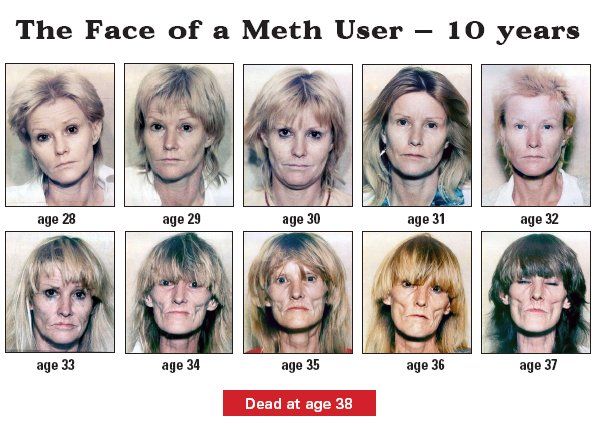
A crack addict or meth-head can explain the whole situation.  It is that simple.

The headlines seem shocking. People living in Cyprus are losing their money, even though they thought it was safe in the bank.  The US government might shut down due to debt.  Banks are collapsing in Spain and the Netherlands. 
 
Cyprus bank line up during the recent crisis.
Patrick Gaz - Getty Images
For those without a significant political or economic background, the issues appear overwhelming.

The basic problem in the financial crisis is that governments, just like a crack addict, have overspent, they are in debt and cannot break the habit.  Worse still, they have made promises to pay for expensive projects in the future, but no money for them. Banks too have overleveraged themselves by making risky investments which could backfire. They thought they had outsourced the risks to others, but now they realize everyone is in the same mess and cannot pay either.  (See a simple explanation of derivatives and risk outsourcing with examples at: http://tinyurl.com/blhtc3q)

So why don’t they fix the problem?
 
The answer is that they are addicted to debt and risky spending, just like a crack addict.

At first, the addiction to crack (debt) was just a recreational thing and only on the weekend. The money to pay for the crack came from the savings account and did not affect the overall financial situation.  But then the crack habit spread to the weekdays.  Soon, the funds in the savings account ran out, but the crack addict had a few credit cards with a cash advance capability.  This went on until the crack addict got a bank letter cutting off the credit cards.  No worries says the crack addict. He still has a line of credit on the equity in his heavily mortgaged condo and that can pay the credit cards.  Meanwhile, the crack addict overcharges for expenses at work. Auditing picks up on the fraud and fires him.  Our crack addict then borrows money from his family telling them about a sure bet for the future. Everyone then finds out he has lost his job and quits lending him money.  So he steals money from his sister’s house when there for dinner. 

This is your government on drugs!
Then he gets evicted, and our crack addict is reduced to stealing money on the street. His favored method is to steal money from savers as they withdraw cash from an ATM. But the police get wise to him, so the broken down crack addict just beats up old ladies and steals their purses to get that next fix and make it to tomorrow.  

He gets arrested.

Once in court, he tells the judge he is a good guy with a bad habit.  He gets sent to a rehab center paid for by the taxpayers.  He gets a financial bail out when he clears his debt through bankruptcy. So his creditors wind up losing all the money he used to pay for years of his crack usage. Once out of rehab, our newly reformed citizen gets a job in the financial district of the city where he lives. 

All is well, until he gets bored on the weekend and decides to head to the park to get some crack. Not a lot. It is just for fun. And is just for the weekend.......

This is where we are at now.  The governments and banks have used every tax, fee, loan, equity, money printing, bond and accounting deferral trick to keep spending.  But the tricks have run out. They cannot give up the the addiction, so they look around to see who still has money. And they are planning on just taking it the same way our crack addict did at the ATM.  (For an explanation of how this is possible, see: http://tinyurl.com/cdrnm7f and http://tiny.cc/z4jcuw) 

This will be the struggle for the immediate future as the addicts who need the money take it from those who have it.  
 
It is the savers versus the takers.  (See more on this at:  http://tinyurl.com/d9d74qf)

Wednesday, March 27, 2013

Derivatives as Weapons of Mass Destruction: An Explanation for non-Economists

Weapons of mass destruction exist in the financial sector. They are called derivatives.  Here is a simple explanation of what they are written by ex-central bankers.  You should care, as they may destroy the financial system as we know it and all of us will be hurt. 

No one really knows how much damage could be done by an unwinding in the derivatives market, but the total exposure (potential losses) may be as high as 700 Trillion dollars (yes that is with a T).  JP Morgan alone may have as much as $90 trillion exposure.  Other financial institutions such as Goldman Sachs, Citigroup, RBS , UBS and RBC all have large exposures.
Photo: 

What the Heck is a Derivative? 

Tough question to explain, but here is a simple example.  

Farmers are planting wheat in the spring. They do not know what success they will have this year. Next to them is a flour mill which will grind their wheat.  Down the road is an investor, and he would like to make money off the wheat crop without doing work, but he is willing to take some financial risk.
 
The investor tells the flour mill the owner “It is only the spring, but I will give you money now in exchange for letting me control who uses your mill in the fall.”

The owner of the mill accepts the money, reasoning that he can make an average year’s profit for his mill off just this one investor, even if the crop fails completely. 

The crop is successful and the farmers arrive at the mill. The investor charges them to gain access to the mill and the mill grinds the wheat into flour.

The investor makes money by charging the farmers more than they would have paid the mill owner, but the investor now controls access to the mill for the season, so the farmers have no choice.

The investor made money not through his labour (the farmer) or by offering a service (the mill owner).   The investor derived his money (i.e. a derivative) by essentially betting that the price of wheat would stay high and the crop would be good.  If the crop had failed completely, the investor’s derivative would have failed and he would have lost all his money.

So, in economic terms, a derivative is a contract whose value is derived from the performance of underlying market factors, such as market securities, indices, interest rates or equity prices.  In this case, the underlying factor was the amount of wheat to be produced and its price which was not known in the spring of the year.

Can Derivatives be a Good Thing?

Yes.  Consider a medium sized trucking company that has just received a major contract for two years of shipping.  They are worried that they could lose money on the contract if the price of diesel fuel goes up suddenly. They approach an investor for a derivative.  The investor agrees to guarantee the price of fuel to the trucking company for the next two years. The price of the fuel will be higher than the current market price, but the trucking company believes they can still make a profit, even at the higher price, so this is good for them. The investor believes that the various rises and falls in diesel prices will allow him a profit. 
 
In this case, the trucking company has been able to outsource its risk (fuel price) to an investor in order to sign the contract with confidence.

Why did Derivatives Turned out to be Dangerous?

The key issue lies in the outsourcing of risk. An intelligent use of derivative can allow a business to outsource its risk. Unfortunately, the folks on Wall Street and in The City have found increasingly complex methods of using derivatives to outsource risk.  They believe that they can be almost risk free by covering all their investment risks with derivatives.

They have done this so much, there is now believed to be some 700 trillion dollars worth of derivative contracts out there – most of which are beyond the understanding of those who supposedly regulate finance markets. The risk involved is also beyond the understanding of the financial institutes involved.

The Killer

The financial institutes such as JP Morgan, UBS and CITI believe they have outsourced risk. But here is the killer. Everyone one of them is busy outsourcing risk by selling derivatives to other financial institutes. In other words, they are all outsourcing their risk to each other.  This is a closed loop with a finite amount of players. If everyone thinks they have outsourced their risk to everyone else, then they are collectively holding all the risk.  They are all vulnerable.
 
The end result is that the financial institutes that thought they were outsourcing risk may find they have to make payouts on the derivatives they bought and sold. The amount will exceed their resource levels and therefore they will go bust.  If there is another financial shock like the 2008 crisis, then the entire derivatives bubble may pop and the process will unwind on itself.

And then there are synthetic derivatives and synthetic derivatives combined with options trading, but might might be a story for another day.

Once again, we may  see the financial institutes lining up for more bailouts if this market unwinds.

This is economics for the rest of us. Financial derivatives should be seen as a weapon of mass destruction.