Total Pageviews

Showing posts with label takers. Show all posts

Wednesday, April 10, 2013

Savers and Takers: The New Fault Lines and Social Unrest

An upcoming struggle is emerging in civil society.  It will be between those who have money but lack the political and financial power to defend it, and those who have the political clout to take it.

The Savers and the Takers.  


www.tntmagazine.com
www.telegraph.co.uk


This will happen because the capitalist system has been turned into a financialist system. The economy is no longer served by the banks and financial institutions.  We are now at a point where the banks force the economy to serve them.  Those who benefit are the financial class, their servants in the political class and the large international organizations such as the EU, the IMF and the World Bank.  Those who suffer are the rest of us who are trapped in the system and cannot find the means to escape it – but they do have small amounts of saved money or equity. 

Who are the savers? In short, it is those people who look to their own future and have taken decisions to set aside “value” from today and hold it for use tomorrow.  This includes those with savings deposits, private pension funds (401K, RRSP, ISA etc) and those who have equity in their homes. It also includes those who hold small physical amounts of precious commodities such as silver, gold and palladium.

The takers are those governments with unreasonably high debt levels and unfunded future liabilities. In cooperation with them are the major international banks that have over leveraged themselves as well as supra-international institutions such as the EU.

This meme – savers and takers – will shape much of the political and economic discourse over the next few years.  The existing examples of where this has occurred have been Greece, Spain, Ireland and Portugal.  How this all plays out is not clear, but there are lessons to be learned about the limits of the individual and social unrest.  

It may be that the takers themselves are those who will be responsible for a reset of the system which will produce chaos and then a new system (Capitalism 2.0 or something different?)  

The small time savers have their money stored in banks. As they are now beginning to realize, this may not be a safe plan. Having seen what happened in Cyprus and Spain and what is being planned in the UK, USA, Canada and Australia, they are getting worried.  As such, depositors are starting to remove their money from banks or are trying to figure out where else to store their wealth. 
 
This willingness to do whatever it takes on the part of the takers has a basic flaw.  The major banks are frequently leveraged out at 25: 1. This means they only have to lose some 4% of its deposits before they have liquidity problems. For more cautious banks that are leveraged out 15:1, this means they would only have to lose some 6% of their deposits before entering into crisis mode.  For those high risk institutions which can be leveraged out at 60:1, a two percent loss would start a bank run.
 
It can be seen that the savers - trying to guard what little they have - may start the run by taking out their savings. If only 4% or more of them do this, we are in trouble.

There is a lesson in all of this. 

It is tough to run a capitalist system with no real capital.  Real capital cannot be created by central banks simply “printing” money.  Real loans and real money have to be backed by real wealth or collateral.  It is clear that the ability to produce real collateral for loans is disintegrating as the standards are falling.
 
A Cyprus Style Bank Robbery
How will the takers take the money from the savers?
 
Multiple approaches exist. Among the most common or obvious are:

1. ZIRP –long term “zero interest rate policies” punish the savers and rewards the debtors.

2. Inflation is the silent thief and it is used by debtors to reduce the cost of repayment.

3. The Cyprus model – simply take the money directly.

4. The Spanish model – place an indirect tax on deposits using the banks as intermediaries.

5. The Australian Model – tax the private pension funds of those with more than $100,000.

6. The Canadian Model – force depositors into a bail-in.

7. The UK and USA model – use guaranteed deposit insurance money to bail out banks.

8. The bank model – use fees and huge spreads on interest rates (as much as 27%) along with fees on fear and the misspelling of products.


The Outlook

There is only one rule in economics that actually works:  That which cannot go on forever – won’t.

As such, the short term emergency policies of money printing and low interest rates will stop because they must.  When they do stop, the sins of more than 30 years of overspending and debt will have to be paid.

It is unlikely that either more austerity (belt tightening) or more stimuli can fix the current economic difficulties.  We are so far in debt in both sovereign and personal terms neither of these two models can assist. The austerity model (UK) is not doing so well and neither is the stimulus model (France).  The outcome is likely a major reset of the financial system which will cause much more trauma than the 2008 upset.  Savers beware and stand by for future shock.

Conclusion

Unless the banks and governments change the way they deal with the rest of civil society, we will be facing significant fault lines in our societies. The savers and the takers will find themselves increasingly at risk of social confrontation and social unrest.  The choice would appear to be between a long period of painful adjustment or a short sharp period of chaotic uncontrolled change.  Both will hurt.
 
 
----------------------


Supporting material can be seen at:

The Canadian Model for takers:  http://tinyurl.com/cvcf9v9 

The UK and USA model for takers: http://tiny.cc/z4jcuw

The Spanish model: http://tinyurl.com/cedrumy 

Why derivatives are dangerous: http://tinyurl.com/blhtc3q

Austerity model not working: http://tinyurl.com/c4chw5l

The inversion of banks and the economy: http://tinyurl.com/cdrnm7f 
 
ZIRP and Zombies: http://tinyurl.com/9wng9vf
 
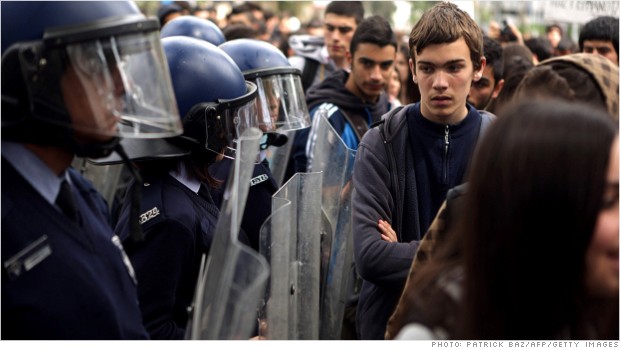
A potential model for urban unrest and outcomes: http://tinyurl.com/cpwqle5

 
On a lighter note and just for fun, we are going to have an all Goldman Sachs MMA cage match between Mark “Brutal Reckoning” Carney and Mario “Whatever it Takes” Draghi.  Carney will be arriving at the Bank of England in July and this may lead to some interesting confrontations as ideas emerge on how to deal with fragile and fragmented economies.  http://tinyurl.com/c4dlrdt


Tuesday, April 9, 2013

Crack Cocaine: Cyprus and the Current Financial Crisis


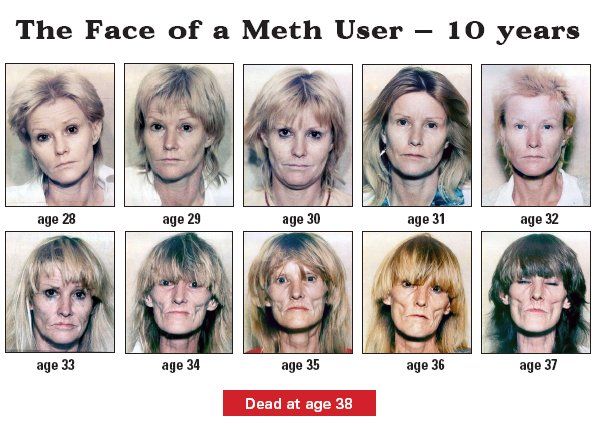
A crack addict or meth-head can explain the whole situation.  It is that simple.

The headlines seem shocking. People living in Cyprus are losing their money, even though they thought it was safe in the bank.  The US government might shut down due to debt.  Banks are collapsing in Spain and the Netherlands. 
 
Cyprus bank line up during the recent crisis.
Patrick Gaz - Getty Images
For those without a significant political or economic background, the issues appear overwhelming.

The basic problem in the financial crisis is that governments, just like a crack addict, have overspent, they are in debt and cannot break the habit.  Worse still, they have made promises to pay for expensive projects in the future, but no money for them. Banks too have overleveraged themselves by making risky investments which could backfire. They thought they had outsourced the risks to others, but now they realize everyone is in the same mess and cannot pay either.  (See a simple explanation of derivatives and risk outsourcing with examples at: http://tinyurl.com/blhtc3q)

So why don’t they fix the problem?
 
The answer is that they are addicted to debt and risky spending, just like a crack addict.

At first, the addiction to crack (debt) was just a recreational thing and only on the weekend. The money to pay for the crack came from the savings account and did not affect the overall financial situation.  But then the crack habit spread to the weekdays.  Soon, the funds in the savings account ran out, but the crack addict had a few credit cards with a cash advance capability.  This went on until the crack addict got a bank letter cutting off the credit cards.  No worries says the crack addict. He still has a line of credit on the equity in his heavily mortgaged condo and that can pay the credit cards.  Meanwhile, the crack addict overcharges for expenses at work. Auditing picks up on the fraud and fires him.  Our crack addict then borrows money from his family telling them about a sure bet for the future. Everyone then finds out he has lost his job and quits lending him money.  So he steals money from his sister’s house when there for dinner. 

This is your government on drugs!
Then he gets evicted, and our crack addict is reduced to stealing money on the street. His favored method is to steal money from savers as they withdraw cash from an ATM. But the police get wise to him, so the broken down crack addict just beats up old ladies and steals their purses to get that next fix and make it to tomorrow.  

He gets arrested.

Once in court, he tells the judge he is a good guy with a bad habit.  He gets sent to a rehab center paid for by the taxpayers.  He gets a financial bail out when he clears his debt through bankruptcy. So his creditors wind up losing all the money he used to pay for years of his crack usage. Once out of rehab, our newly reformed citizen gets a job in the financial district of the city where he lives. 

All is well, until he gets bored on the weekend and decides to head to the park to get some crack. Not a lot. It is just for fun. And is just for the weekend.......

This is where we are at now.  The governments and banks have used every tax, fee, loan, equity, money printing, bond and accounting deferral trick to keep spending.  But the tricks have run out. They cannot give up the the addiction, so they look around to see who still has money. And they are planning on just taking it the same way our crack addict did at the ATM.  (For an explanation of how this is possible, see: http://tinyurl.com/cdrnm7f and http://tiny.cc/z4jcuw) 

This will be the struggle for the immediate future as the addicts who need the money take it from those who have it.  
 
It is the savers versus the takers.  (See more on this at:  http://tinyurl.com/d9d74qf)

Wednesday, March 27, 2013

The Predatory Eye on your Savings: Savers and Takers

Recent events in Cyprus, Spain and in the EU have shown that the previously taboo practice of taking your savings money has been broken.  Governments and banks, driven by the need for cash are exploring all possibilities. Like sharks, they must constantly move ahead to continue their intake of prey.
 

He is hungry and he is looking for your savings!
www.tntmagazine.com
Consider the statement of Mr Jeroen Dijsselbloem (pronounced Diesel Boom?), the former Dutch Finance Minister who is now President of the Eurogroup Council.  He stated that what happened in Cyprus is a template for what can happen next. He adds:
 
“If there is a risk in a bank,” he said, “our first question should be ‘Okay, what are you in the bank going to do about that? What can you do to recapitalize yourself?’ If the bank can’t do it, then we’ll talk to the shareholders and the bondholders, we’ll ask them to contribute in recapitalizing the bank, and if necessary the uninsured deposit holders.”  

In other words, shareholders and bond holders can expect a major haircut.

Then consider what the Bank of England and the American Federal Deposit Insurance Corporation (FDIC) have been jointly considering how savings deposits which are said to be guaranteed for the average saver or depositor will instead be used to bail out failing banks.  Hard to believe. (See more on this at http://tiny.cc/z4jcuw )  In other words, savers who thought their deposits were guaranteed for up to the first 100,000 may want to rethink that position.

In Spain, the Finance Minister has said that the Spanish government will put a levy (read tax) on banks based on the total amount of savings they hold.  Bank account holders in Spain can expect to pay this indirect tax through higher fees and lower service levels.  (See more at: http://tinyurl.com/cedrumy)

To reduce this to its most basic, the logic and math of the economists says: 

Banks and governments need more money to sustain their debt and overleveraged risks.
They cannot raise more through taxing a declining economy.
They are running out of accounting tricks to kick the can down the road.
Printing money is not working.
Savers have money.
The banks and the governments will change the rules so they can get the money.

Seen collectively, the economists who work for the banks and the government know where your money is and they need it. They are casting a predatory eye on your savings.

Unfortunately, the politicians will not stop this. Their own positions are closely aligned to the banks so they will assist the process. (See http://tinyurl.com/cdrnm7f)

This is economics for the rest of us.  Savers beware.