Total Pageviews

Showing posts with label debt. Show all posts

Tuesday, April 9, 2013

Crack Cocaine: Cyprus and the Current Financial Crisis


A crack addict or meth-head can explain the whole situation.  It is that simple.

The headlines seem shocking. People living in Cyprus are losing their money, even though they thought it was safe in the bank.  The US government might shut down due to debt.  Banks are collapsing in Spain and the Netherlands. 

 
Cyprus bank line up during the recent crisis.
Patrick Gaz - Getty Images
For those without a significant political or economic background, the issues appear overwhelming.

The basic problem in the financial crisis is that governments, just like a crack addict, have overspent, they are in debt and cannot break the habit.  Worse still, they have made promises to pay for expensive projects in the future, but no money for them. Banks too have overleveraged themselves by making risky investments which could backfire. They thought they had outsourced the risks to others, but now they realize everyone is in the same mess and cannot pay either.  (See a simple explanation of derivatives and risk outsourcing with examples at: http://tinyurl.com/blhtc3q)

So why don’t they fix the problem?
 
The answer is that they are addicted to debt and risky spending, just like a crack addict.

At first, the addiction to crack (debt) was just a recreational thing and only on the weekend. The money to pay for the crack came from the savings account and did not affect the overall financial situation.  But then the crack habit spread to the weekdays.  Soon, the funds in the savings account ran out, but the crack addict had a few credit cards with a cash advance capability.  This went on until the crack addict got a bank letter cutting off the credit cards.  No worries says the crack addict. He still has a line of credit on the equity in his heavily mortgaged condo and that can pay the credit cards.  Meanwhile, the crack addict overcharges for expenses at work. Auditing picks up on the fraud and fires him.  Our crack addict then borrows money from his family telling them about a sure bet for the future. Everyone then finds out he has lost his job and quits lending him money.  So he steals money from his sister’s house when there for dinner. 
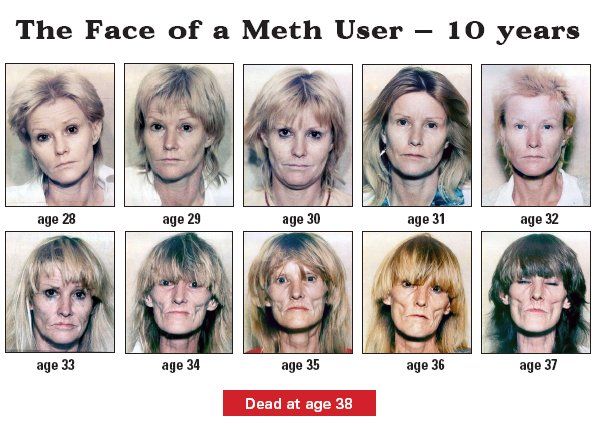
This is your government on drugs!
Then he gets evicted, and our crack addict is reduced to stealing money on the street. His favored method is to steal money from savers as they withdraw cash from an ATM. But the police get wise to him, so the broken down crack addict just beats up old ladies and steals their purses to get that next fix and make it to tomorrow.  

He gets arrested.

Once in court, he tells the judge he is a good guy with a bad habit.  He gets sent to a rehab center paid for by the taxpayers.  He gets a financial bail out when he clears his debt through bankruptcy. So his creditors wind up losing all the money he used to pay for years of his crack usage. Once out of rehab, our newly reformed citizen gets a job in the financial district of the city where he lives. 

All is well, until he gets bored on the weekend and decides to head to the park to get some crack. Not a lot. It is just for fun. And is just for the weekend.......

This is where we are at now.  The governments and banks have used every tax, fee, loan, equity, money printing, bond and accounting deferral trick to keep spending.  But the tricks have run out. They cannot give up the the addiction, so they look around to see who still has money. And they are planning on just taking it the same way our crack addict did at the ATM.  (For an explanation of how this is possible, see: http://tinyurl.com/cdrnm7f and http://tiny.cc/z4jcuw) 

This will be the struggle for the immediate future as the addicts who need the money take it from those who have it.  
 
It is the savers versus the takers.  (See more on this at:  http://tinyurl.com/d9d74qf)

Wednesday, March 27, 2013

The Predatory Eye on your Savings: Savers and Takers

Recent events in Cyprus, Spain and in the EU have shown that the previously taboo practice of taking your savings money has been broken.  Governments and banks, driven by the need for cash are exploring all possibilities. Like sharks, they must constantly move ahead to continue their intake of prey.
 

He is hungry and he is looking for your savings!
www.tntmagazine.com
Consider the statement of Mr Jeroen Dijsselbloem (pronounced Diesel Boom?), the former Dutch Finance Minister who is now President of the Eurogroup Council.  He stated that what happened in Cyprus is a template for what can happen next. He adds:
 
“If there is a risk in a bank,” he said, “our first question should be ‘Okay, what are you in the bank going to do about that? What can you do to recapitalize yourself?’ If the bank can’t do it, then we’ll talk to the shareholders and the bondholders, we’ll ask them to contribute in recapitalizing the bank, and if necessary the uninsured deposit holders.”  

In other words, shareholders and bond holders can expect a major haircut.

Then consider what the Bank of England and the American Federal Deposit Insurance Corporation (FDIC) have been jointly considering how savings deposits which are said to be guaranteed for the average saver or depositor will instead be used to bail out failing banks.  Hard to believe. (See more on this at http://tiny.cc/z4jcuw )  In other words, savers who thought their deposits were guaranteed for up to the first 100,000 may want to rethink that position.

In Spain, the Finance Minister has said that the Spanish government will put a levy (read tax) on banks based on the total amount of savings they hold.  Bank account holders in Spain can expect to pay this indirect tax through higher fees and lower service levels.  (See more at: http://tinyurl.com/cedrumy)

To reduce this to its most basic, the logic and math of the economists says: 

Banks and governments need more money to sustain their debt and overleveraged risks.
They cannot raise more through taxing a declining economy.
They are running out of accounting tricks to kick the can down the road.
Printing money is not working.
Savers have money.
The banks and the governments will change the rules so they can get the money.

Seen collectively, the economists who work for the banks and the government know where your money is and they need it. They are casting a predatory eye on your savings.

Unfortunately, the politicians will not stop this. Their own positions are closely aligned to the banks so they will assist the process. (See http://tinyurl.com/cdrnm7f)

This is economics for the rest of us.  Savers beware.

Monday, March 18, 2013

More Austerity or More Stimulus? – Chaos and Confusion Ahead

***Please feel free to leave comments or ask questions at the bottom of the article. We will reply or will write a special article to answer your questions.***


How to fix the economic malaise that is gripping most of Europe and North America?

One school of thought says that it has been an excess of government spending and entitlement programs that has caused the problem and we need to cut spending (austerity).  Another school of thought says that more spending by government will create growth and more jobs for a better future (stimulus).  Both of these schools of thoughts advance multiple arguments about why they are right.

Protesters in Montreal in April 2012.  Note the green and black flag
which identifies this group as anarcho-primivitists.
Photo by the author.
 
Here is another thought.  Maybe the debt driven financial system we have in the advanced economy democracies is so broken that neither of these approaches can have a positive effect.  What we need – or will get anyway – is a major financial reset that will be devastating.    

The Austerity School of Thought

This group includes major countries such as the UK. The British Chancellor of the Exchequer George Osborne is advocating cuts in spending and reductions in government programs. In short, Mr. Osborne believes (hopes?) that this policy will see less money going into the non-productive government sector and more money finding its way into the productive private sector.  Additionally, the government will not have to borrow as much money for next year’s budget, which in turn means lower debt payments and more money available for non-debt related spending.

The Stimulus School of Thought

Over on the other side, we find the new President of France with the somewhat confusing last name:  Francois Hollande.  He is a follower of the stimulus school of thought which suggests governments must spend in dire economic times and support failing industries though tax payer support or nationalization.  He and his supporters believe that the stimulus to the economy will create more employment which in turn means more tax dollars to be collected. In the medium to long term, this school of thought thinks that the growth created will more than outweigh the new debts (and costs) being created by borrowing more.   

What if Both are Wrong?

It is possible that neither school of thought is valid and both will fail. The problem may be that most of the advanced economy countries are so far in debt that there can be no turnaround. 

Increased austerity may only create greater economic misery and the savings from less debt will not be sufficient to allow the economy to take off again. As such, increased austerity means a shrinking economy with more unemployment and greater social welfare costs which means greater debts which means less government money which means more unemployment which means – well – you get the point.   It is a death spiral.  This problem was highlighted by a recent IMF report which suggests that austerity cuts do not have the positive impact hoped for.

Increased stimulus means greater debt, which means next year’s budget will have to support more interest payments on the debt which means that you will have higher debt payments which means you will have to borrow even more money which means even higher debt payments which means......another debt induced death spiral.   

Conclusion? 

If governments involved had only modest debt levels, then either approach might be reasonable based on the unique circumstances of individual countries.

However, with most national governments in Europe and North America having been on debt fueled spending binges dating back to the 1980s or 1990s, they are so far in debt that they are in a death spiral in either case.   (Hello to Norway, one of the notable exceptions which is cash rich due to oil resources and good long term planning!)

The solution – or at least the result -  will be a major system reset which will involve massive cuts in government spending or a number of governments defaulting on national debts – at least to foreign donors.  (Hello Argentina in 2002, Zimbabwe in 2006 or Brazil in 2000.)  This means at least another lost decade, especially for the youth group of 16-29.

This is economics for the rest of us – with chaos and confusion ahead as debt levels continue to soar and no workable solution in sight.

-----

 Annex on Debt

Some of the debt levels are so massive that they are literally not comprehensible to the average person. For instance: 

USA – 16 trillion dollars of debt or close to 100,000 dollars for every working American. This does not include unfunded liabilities such as entitlement programs which may equate to considerably more than the stated national debt.  It also does not include state and municipal debts (Hello Detroit!)

UK - £1,111.4 billion at the end of December 2012, equivalent to 70.7 % of GDP (Yup – that is more than a trillion pounds). This is only debt to the private sector and does not include unfunded liabilities. Even with low interest rates, this means the UK government will have to spend at least 47 billion pounds on debt payments next year.  Imagine what could be done with 47 billion pounds if it was not going to the money lenders.

Italy – somewhere north of 2 trillion (with a T) Euros and rising with a shrinking economy. 

Spain – close to 900 billion Euros and rising fast despite having ransacked the national social security savings pool last year.

ZIRP and Zombies - The Undead Bankers and Industrialists Walk Among Us

***Please feel free to leave comments or ask questions at the bottom of the article. We will reply or will write a special article to answer your questions.***


The un-dead bankers walk among us, cloaked by their ZIRPian shields.....
 
National level politicians and Central Bankers are desperate to keep up the appearance of an economic recovery.  As a result of these policies, iinterest rates have been forced to record lows for extended periods of time. This has resulted in ZIRP – zero interest rate policies.  Almost all of the major advanced economy countries have Central Banks with interest rates which are effectively at or near zero percent.  If inflation is taken into account, then the interest rates are actually negative in real terms.
 
Photo by Tod Seelie 
Yet at the same time, these same governments want failed banks, insurance companies and large aging industries to be bailed out to "save the economy" or to "save jobs."
 
We now have a series of zombie banks and corporations which are being kept alive with the massive infusion of taxpayer dollars and low interest rates. These banks and industries should have been allowed to die a natural death years ago and new viable entities should have emerged from their ashes.  But instead they continue to wander the planet in a state in which they are neither alive nor dead.  They are the zombies of the advanced economy democracies, cloaked by ZIRPian shields. They are eating up capital that should have been allocated to new industries or used for capital acquisition/infrastructure projects. The money is being wasted because short term politicians fear to let nature take its course or they are beholden to their paymasters in the financial industry.
 
And what of ZIRP? Central Banks, with governmental unofficial approval, are keeping interests rates artificially low. Most governments and many citizens are so far in debt now that if interest rates were to return to a more normal 3 or 4 percent (overnight lending rate), the result would be wide scale defaults.  Debt has become so pervasive that it has overwhelmed the system. Low interest are now being used to extract wealth from those who save money, have a private pension (401K, RRSP etc) or who have real assets.  Low interest rates should be seen for what they are - a means of transferring excess capital from those who have it (savers) to those who are over their heads in debt (governments, large banks).  This is the indirect method of stealing money from those who work and save. 
 
Literally trillions (with a T) of capital dollars have been mis-allocated.  The damage is both immense and long term.
 
The un-dead bankers and industrialists look just like us. They walk among us unseen.  But when their ZIRPian shields fall, their decaying flesh will be revealed to us - along with the cost of what it took to keep them alive for so long (hello to the nice folks at CITI Bank).  Governments and Central Bankers can attempt to blow life into their already rotting corpses, but this process will ultimately fail.
 
This is economics for the rest of us - those of us who pay for the ZIRP cloaked zombies!